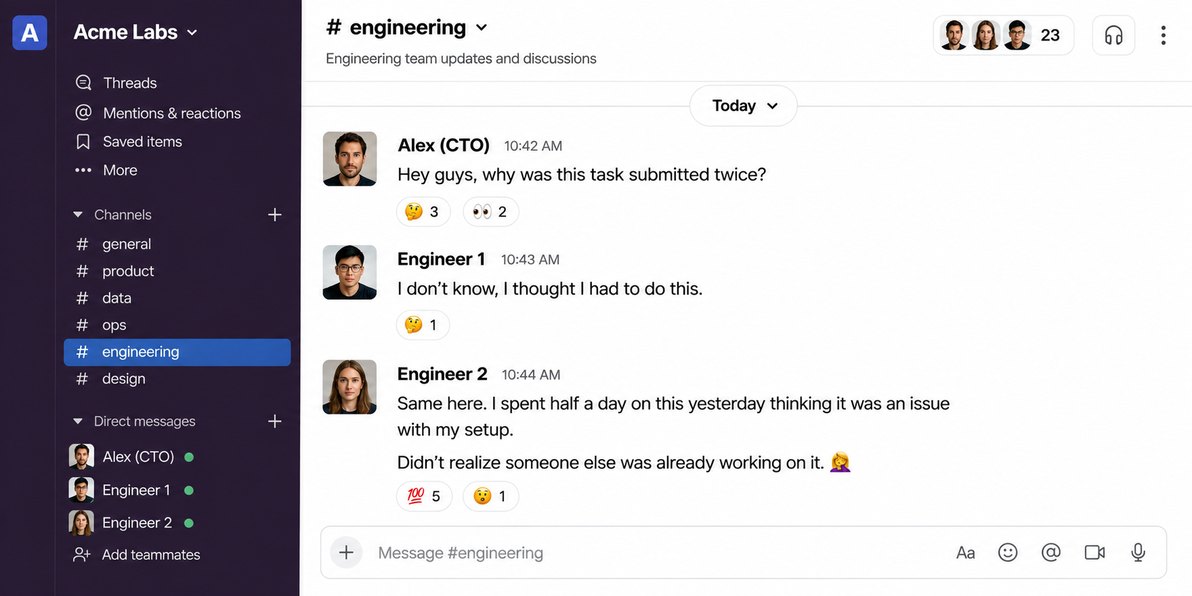
Two engineers hit the same build failure last month. Each spent an afternoon on it. Each decided it was something in their own setup, and moved on.
We keep running into this, and documentation is not the fix. The pull request gets written up. The dozen detours underneath it do not, and the first thing to disappear is the dead end that turned out not to matter.
The last two weeks went into building memory that knows who is asking, and facts that can show where they came from. Further down: what shipped, a recap of the Berlin evening we ran with Fastino Labs, and a webinar on 22 September where Vasilije builds a company brain live.
An engineer’s day is one documented pull request sitting on a dozen undocumented detours. The detours never leave the machine, so the next person to hit the same wall pays for it again. Private AI chat made that worse rather than better, because everyone now runs a few hundred exchanges nobody else can read or query.
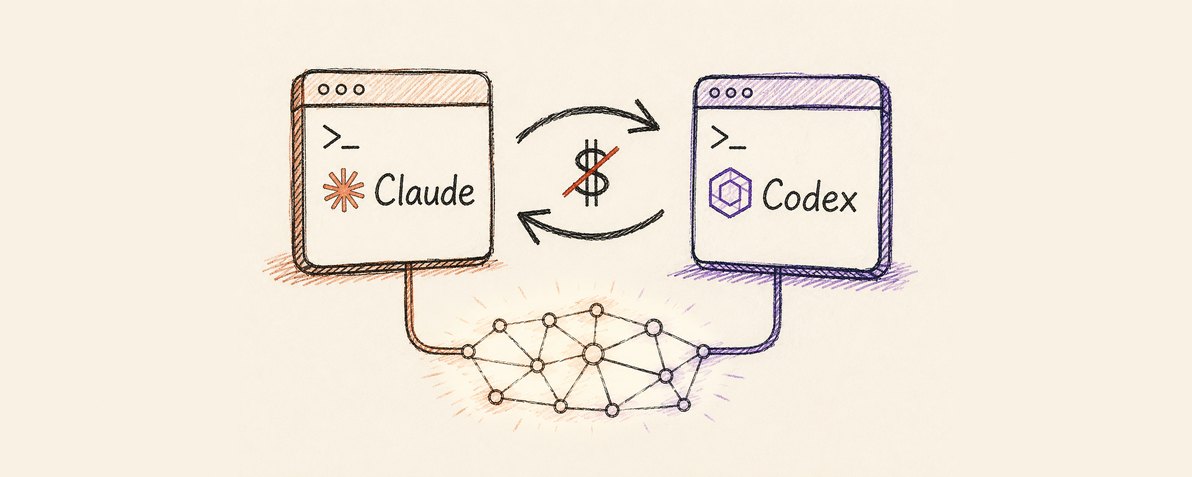
Running two coding agents means paying the switching tax. You build context in one all morning, then open the other and start from nothing. cognee’s plugins for Claude Code and Codex write to one knowledge graph, so you can close one mid-task, open the other, and pick up where you left off.
Forty-six tickets, most of them merged. Four are worth naming.
Memory that knows who is asking. Preference nodes with weighted edges personalise retrieval per user inside one graph, so the same question returns different answers depending on who asks.
recall() now answers before the graph exists. It returns a warming-up marker instead of running a full graph search and an LLM call. We found 511,000 searches spent on empty graphs.
cognee-cli doctor. Preflight checks that fail loudly at first use, instead of surfacing as a cryptic error three steps later.
Provenance on any fact. Each fact in the graph can carry an audit-grade trail in W3C PROV-O.
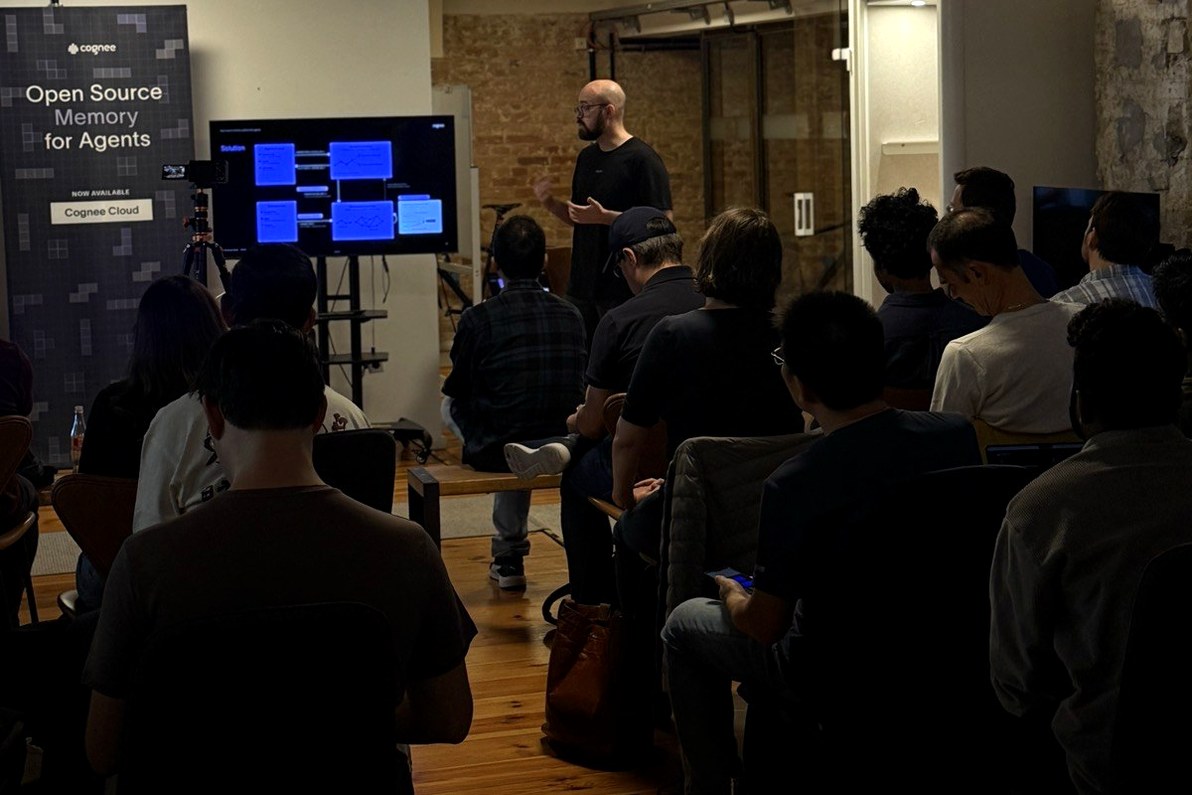
cognee and Fastino Labs took over a Kreuzberg loft for an evening on the layer underneath agent memory. Mary Newhauser made the case for GLiNER2, a schema-conditioned encoder that does entity and relation extraction from a 200 MB model in about 2 GB of RAM, and Vasilije followed on memory with local models before a live run of the two systems together. The room stayed on afterwards, laptops still open.
Eighteen people joined the community call to start an open-source onboarding app for new cognee members. It will answer what every newcomer asks — where do I find this, which tool do we use for that — with the cognee company brain behind it, so people and agents query the same source. TypeScript and Postgres, and you can fork it as a head start on your own company brain.
One webinar, and the standing open call. Community hours are where we work through cognee questions and whatever you are building with it. No slides there, bring a problem.
Forward this issue to a builder who cares about self-improving AI memory.
Know someone using agents?
Forward this issue to a builder who cares about self-improving AI memory.