AI Memory Platforms for Sales Intelligence in 2026

These days, a single enterprise deal can pass through a website chatbot, a prospecting agent, an enrichment tool, a call-summarizing AI, and a forecasting model. Each one executes its task confidently, but none of them know what the others already learned.
The real culprit here is the lack of continuity. Memory is starting to appear across the GTM stack, but it's still implemented unevenly and often confined to individual applications.
Adding memory to a sales tool is not about boosting the size of the database but about having something that holds onto why an account got prioritized, how its buying committee has shifted, which objections are still open, what got promised, and which of the last ten actions actually moved the deal.
In 2026, three different camps are trying to deliver that increasingly essential layer:
- Some sales platforms are wiring memory directly into their own products
- Customer-engagement vendors are shipping shared conversation memory across channels
- A newer set of infrastructure providers is building memory that sits underneath the whole sales stack, usable by whatever agent, model, or application a company plugs in.
Which approach a company actually needs depends on two newer GTM questions: where does the agent's understanding of the account come from, and what of it survives once the task is done?
Sales intelligence should pass the torch to memory
Once upon a time, sales intelligence used to mean one thing: figuring out who to call, and when.
In recent years, AI has expanded that job. Agents now research accounts, read signals, recommend next moves, prep meetings, summarize calls, and update the CRM without being asked. But what many still struggle to do reliably is carry what they learn from one task into the next.
Intelligence is supposed to spot the signal, action is supposed to turn it into a move, and memory is what's left after the move — without it, a sales agent is no smarter about the account tomorrow than it was today.
| Layer | Question | Answer |
|---|---|---|
| Intelligence | Who matters, and why now? | Contact data, account research, intent signals, stakeholder maps |
| Action | What should happen next? | Outreach, routing, meeting preparation, follow-up, CRM updates |
| Memory | What should carry forward? | Decisions, objections, preferences, relationships, outcomes, source context |
Real sales memory ends up needing all of the above: what the company knows about itself, what it knows about this account, what actually happened between them, and what the previous results say to do next.
What sales agents actually need to remember
A useful sales memory layer is really four different kinds of interlocking context:
| Memory type | What it contains | Example | Without it |
|---|---|---|---|
| Business memory | Product positioning, ICPs, pricing rules, approved claims, playbooks, territory logic | "For healthcare accounts, lead with implementation control rather than speed." | The agent contradicts the company's own playbook. |
| Account memory | Company changes, stakeholder relationships, qualification history, research, intent signals | "The account expanded its data function and reopened a project paused last year." | The agent treats a returning stakeholder like a stranger. |
| Interaction memory | Calls, emails, questions, objections, commitments, preferences, next steps | "The CFO asked for a three-year cost model before procurement review." | The agent re-asks a question the buyer already answered. |
| Outcome memory | What led to progress, delay, loss, expansion, or disengagement | "Technical validation moved similar deals forward; early pricing pressure didn't." | The agent repeats a pitch that's already failed. |
These types of memory also shouldn't work in isolation from each other — an objection only becomes useful memory once the system knows who raised it, which account and deal it belonged to, what evidence addressed it, and whether the deal actually moved afterward.
Why memory changes sales intelligence workflows
This shows up across nearly all workflows where an AI agent touches a deal.
Account research and prioritization
A research agent without memory can still write a competent brief from public data and CRM fields. But with memory, it starts connecting this information to earlier campaigns, past qualification calls, stakeholder history, and deals that already went through or died.
It can check whether an account is currently active in a way that changes what's already known about it, whether the people involved in the deal last time are still around, and whether whatever killed it in Q1 has changed enough to make the account worth revisiting.
Meeting preparation and follow-up
Manual meeting prep usually means digging through the CRM, call recordings, email threads, calendar notes, product docs, and whatever a seller happened to jot down.
Memory turns that scavenger hunt into a narrative that includes what the buyer is trying to change, which stakeholders care about which outcomes, what's already been said and what's still open, what was promised, what's shifted since the last call.
Then, in the follow-up, an agent can write the next message from the actual state of the relationship instead of just recapping whatever happened most recently.
Multi-touch outreach
A CRM can tell you that a buyer received three emails, attended a webinar, visited a pricing page, and spoke with an SDR.
But a memory layer can preserve what those interactions actually revealed: the buyer's preferred channel, the problem they're investigating, which message prompted a response, and why the conversation paused.
As a result, an agent doesn't have to load the buyer's entire history to avoid repeating itself — it just stops making the buyer repeat themselves.
Opportunity handoffs and long sales cycles
Account context often breaks at organizational boundaries — like when an SDR passes the opportunity to an AE, specialists join, ownership changes, or the deal pauses for two quarters and comes back under a new budget holder.
CRM fields can transfer the stage, value, and next task, but not the reasoning behind them: who built internal support, why security became a blocker, or what finally moved procurement.
Memory makes that reasoning available without depending on the one person who happened to learn it.
Learning from wins, losses, and stalled deals
Most sales systems record outcomes as fields: closed won, closed lost, no decision, disqualified, churned. While useful for reporting, these labels don't tell an agent what to actually reuse.
Outcome memory preserves the story behind the label, connecting the account, stakeholders, objections, actions, shared assets, and the event that changed momentum.
Over time, agents can retrieve patterns such as which proof points work by segment, which stakeholder gaps predict stalled deals, which objections signal real risk, and which follow-ups revive inactive opportunities.
Wait, isn't this what the CRM is for?
A powerful CRM records the accounts, contacts, deal stages, owners, values, activities, and forecasts that keep the process going.
But a CRM record and context an agent can actually reason with aren't the same thing. Much of what an agent needs is hard to reduce to a fixed field: a stakeholder's changing influence, an objection that resurfaced in three different forms, a promise buried in an email thread, a qualification call that never made it into notes, a mismatch between the CRM stage and the buyer's actual behavior, a lesson drawn from several similar deals.
That context may exist somewhere in the stack, but the problem is making it available at the moment an agent needs it.
And that's where the market is heading: the CRM keeps its job as the official record, while a separate context or memory layer takes on the job of getting agents ready to actually act on it.
What a memory platform for GTM should include
Let's go over a few things that can turn scattered sales context into better agentic decisions, without trading the old fragmentation problem for a new governance one.
Persistent account identity
Memory only works if it stays connected to the right company, contact, opportunity, product, and interaction.
This can get complicated when the same buyer uses several email addresses, changes employers, appears in multiple deals, or moves between channels. Weak identity resolution can split one person's history across duplicate records — or attach it to the wrong person altogether.
Cross-source ingestion
A truly useful GTM memory layer should be able to pull in things like:
- CRM records
- calls and transcripts
- emails and messages
- account research
- product and pricing documents
- intent and engagement signals
- workflow and agent activity
- seller corrections and feedback
This info may need to be sourced from different applications and the memory layer doesn't need to replace those source systems — it needs enough provenance and source context for an agent to know where a memory came from, and how much weight to give it.
Relationship-aware context
Sales context is difficult to deduce if it exists in a vacuum. A stakeholder influences a certain opportunity. An objection relates to a specific product capability. A follow-up addresses an earlier commitment. A new hire changes the buying group.
Similar-sounding language can be retrieved from a searchable archive, but this will rarely rebuild the connections. That's why AI knowledge graphs and context graphs keep showing up in sales memory: they preserve how people, accounts, conversations, and decisions relate to one another.
Temporal awareness
The inexorable flow of time marches on, and sales context is no more permanent than anything else. Budgets open and close, champions move on, timelines slip, requirements shift, and yesterday's obstacle becomes tomorrow's solution.
A good memory layer keeps the history without confusing it for the present. It remembers what changed, when it changed, and which version of the account is still current.
Selective recall
With persistent AI memory, an agent doesn't need — and shouldn't receive — everything the organization has ever recorded about an account. It needs the subset that can actually impact the current decision.
What's relevant for a prospecting message isn't always relevant for a forecast review, a technical discovery call, or a renewal conversation. Retrieval has to account for the task, user, account, stage, permissions, and time. Selective recall also keeps context (and its cost) under control.
A write-back and correction loop
If memory doesn't change after an agent acts, it's not much more valuable than a snapshot.
A robust layer needs a way to add confirmed facts, update outdated information, record decisions and outcomes, connect related observations, preserve corrections, and remove invalid or expired memories.
Scoped sharing
Some memory should be shared across the revenue organization, but some belongs only to a specific account, opportunity, user, region, or agent.
This means the memory model needs explicit ownership, permissions, and retrieval scope built in from the start.
Governance, provenance, and deletion
A production memory layer has to make it possible to answer these questions:
- Who created this memory?
- Which source supports it?
- When was it last updated?
- Which agent used it?
- Who can retrieve it?
- When should it expire?
- How can it be corrected or deleted?
None of that can wait until after memory has already piled up across thousands of interactions — retrofitting governance later is much harder than building it in from day one.
The AI memory platform landscape in 2026
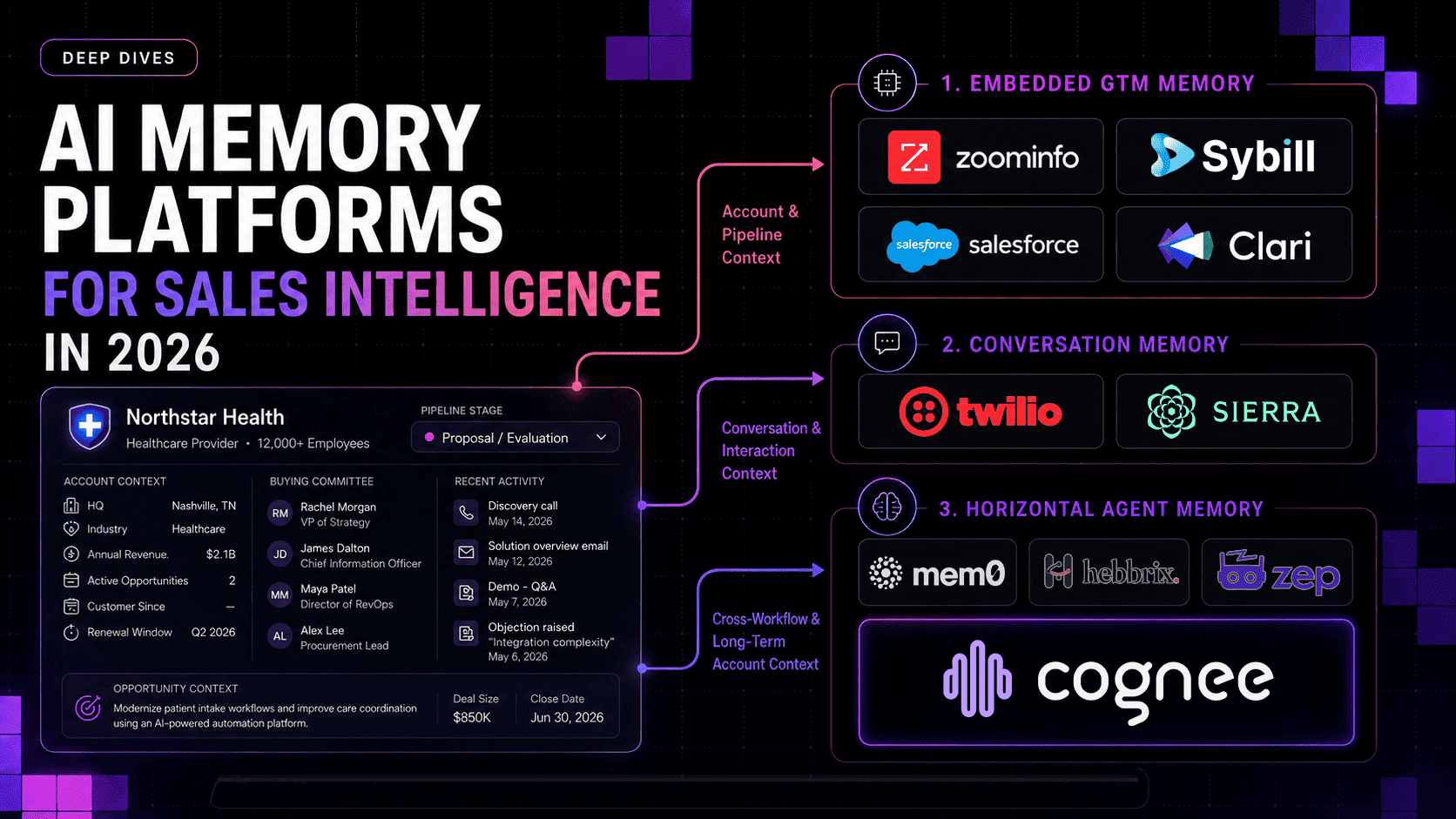
As we mentioned in the intro, AI memory for sales intelligence is developing along three paths:
| Approach | How memory is delivered | Representative platforms |
|---|---|---|
| Embedded GTM memory | Context and memory are built into the commercial platform itself | ZoomInfo, Sybill, Salesforce, Clari |
| Conversation memory | Customer context persists across channels and human or AI interactions | Twilio, Sierra |
| Horizontal agent memory | A separate memory layer serves several agents and applications | Mem0, Hebbrix, Zep, cognee |
These categories aren't mutually exclusive — a company might run sales-native memory inside one platform while maintaining a broader shared memory layer across the rest of its agent stack.
Platforms with embedded GTM memory
ZoomInfo: GTM context built in
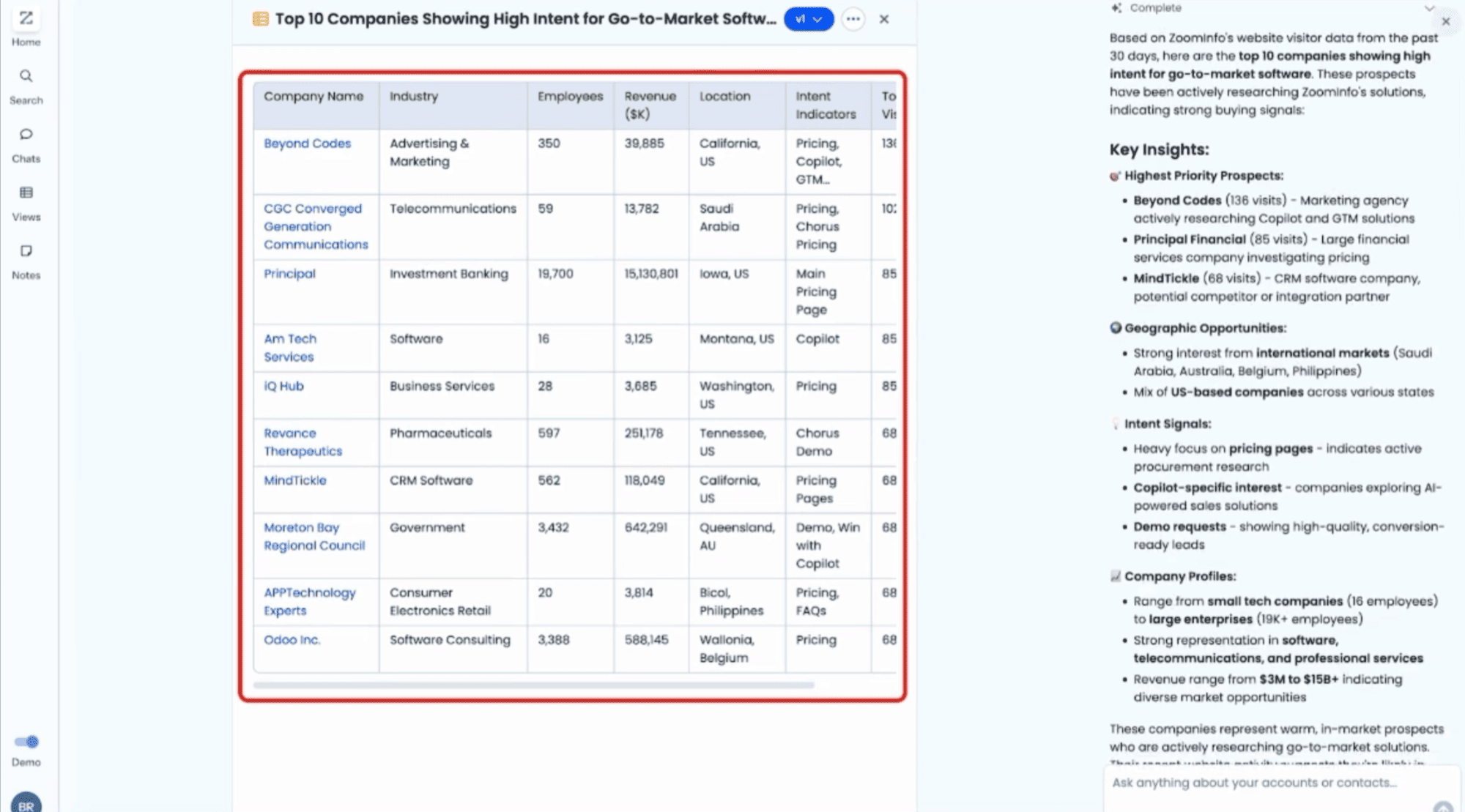
ZoomInfo believes that if you already have the data, you shouldn't have to supplement it with a separate memory layer to make use of it.
Its GTM Context Graph combines company, contact, CRM, engagement, and buying-signal data into an identity-resolved structure. GTM Workspace and GTM Studio use that context inside sales workflows, while GTM.AI exposes the same underlying layer through APIs and MCP connections to external assistants and applications.
For an organization already using ZoomInfo, this can remove the need to assemble a separate account-context layer for a first use case.
However — the memory stays grounded in the data model, governance, and operating environment of the GTM platform. A company that needs one memory shared across unrelated agents, internal applications, research systems, and other commercial vendors will probably still want an independent layer on top.
Sybill: institutional memory designed around deals
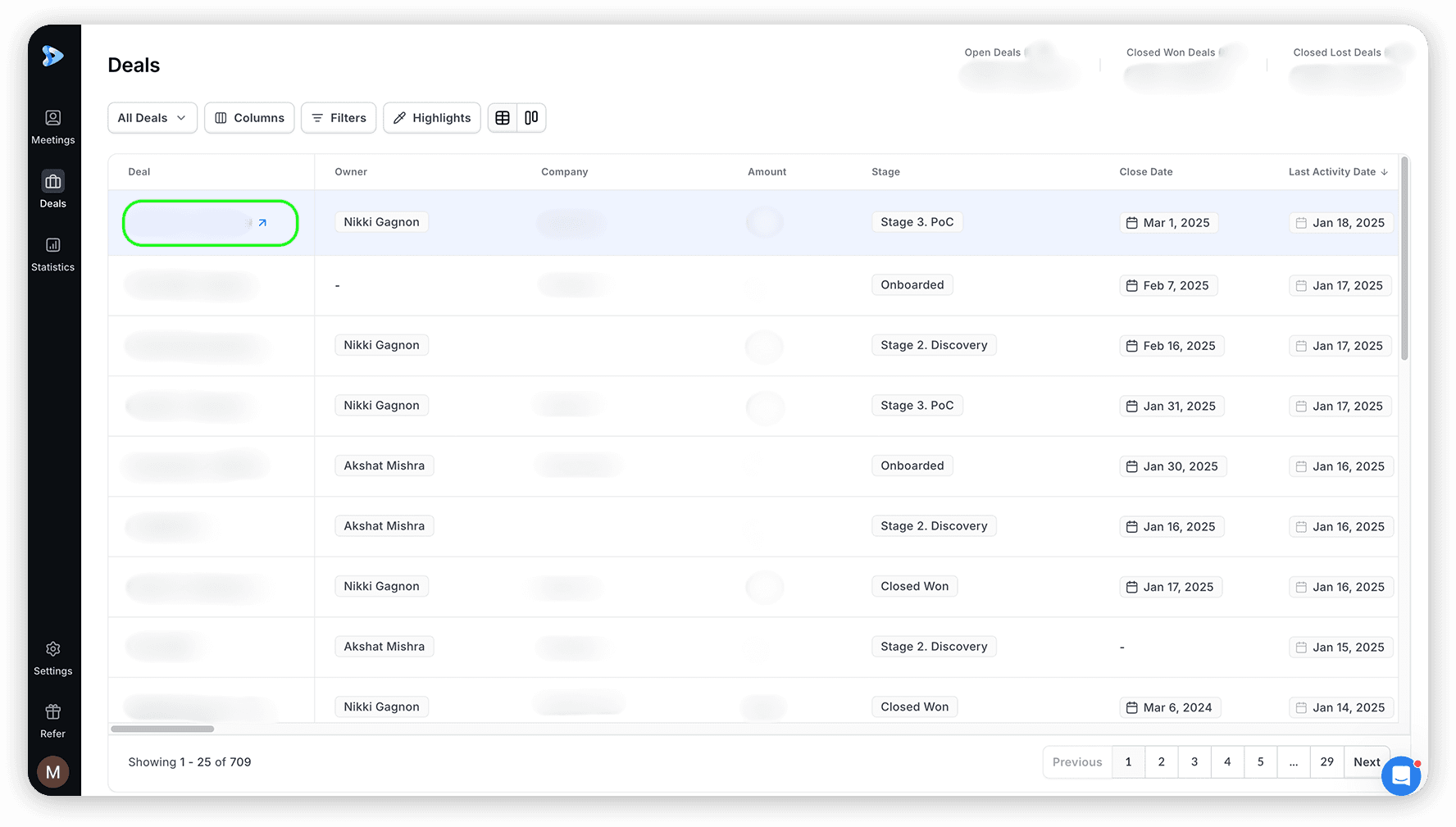
Sybill built its memory story around the deal itself, not the database underneath it.
Its context graph connects people, products, playbooks, processes, conversations, deals, and outcomes. The platform presents this as institutional memory that can support account strategy, deal inspection, forecasting, CRM updates, meeting preparation, coaching, and follow-up.
Sybill's strongest angle is that its memory aims to preserve patterns across won, lost, and stalled opportunities, and apply them to active revenue decisions.
That's a strong fit for shared deal intelligence specifically. But it's a weaker fit if the actual goal is one memory substrate spanning sales, support, product, research, and whatever custom agents get built next.
Salesforce: memory built into the Agentforce stack
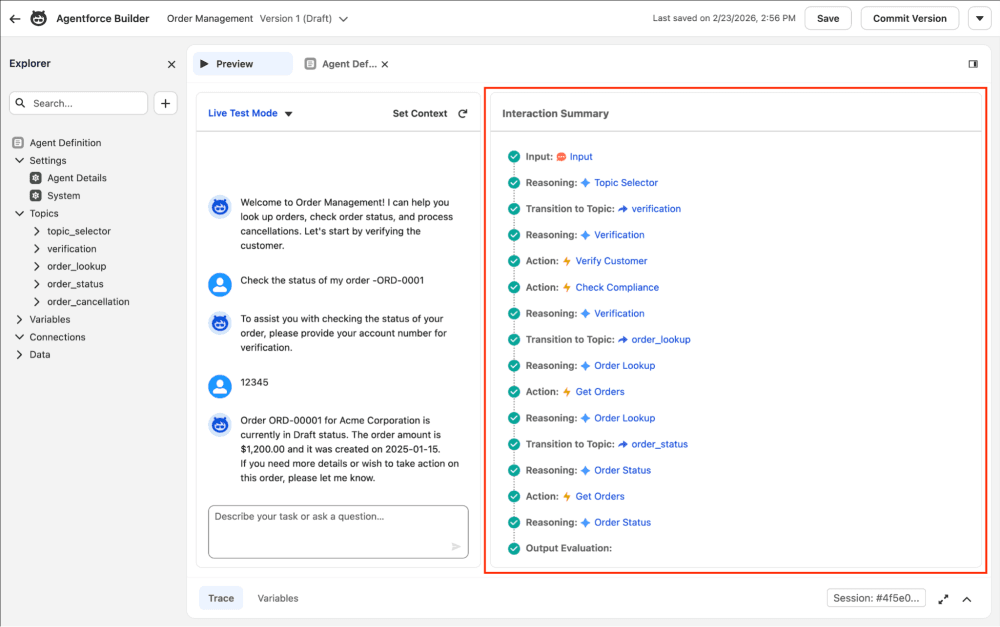
Salesforce is already a staple of many enterprise sales stacks, so they opted to implement persistent memory inside the same identity, data, governance, and agent environment used by Agentforce and Data 360 rather than introduce another standalone layer.
Agentic Memory retains session summaries, profile facts, preferences, and other customer context across agents, sessions, and channels. Alongside it, Agentforce 360's Intelligent Context grounds agents in complex unstructured enterprise data as well as the structured records available through Data 360.
The tradeoff is that this memory is closely tied to Salesforce's Data 360 model and Agentforce ecosystem, and it isn't sales-specific — the same infrastructure can support service, employee, and other Agentforce workflows.
Clari: revenue context built around the deal lifecycle
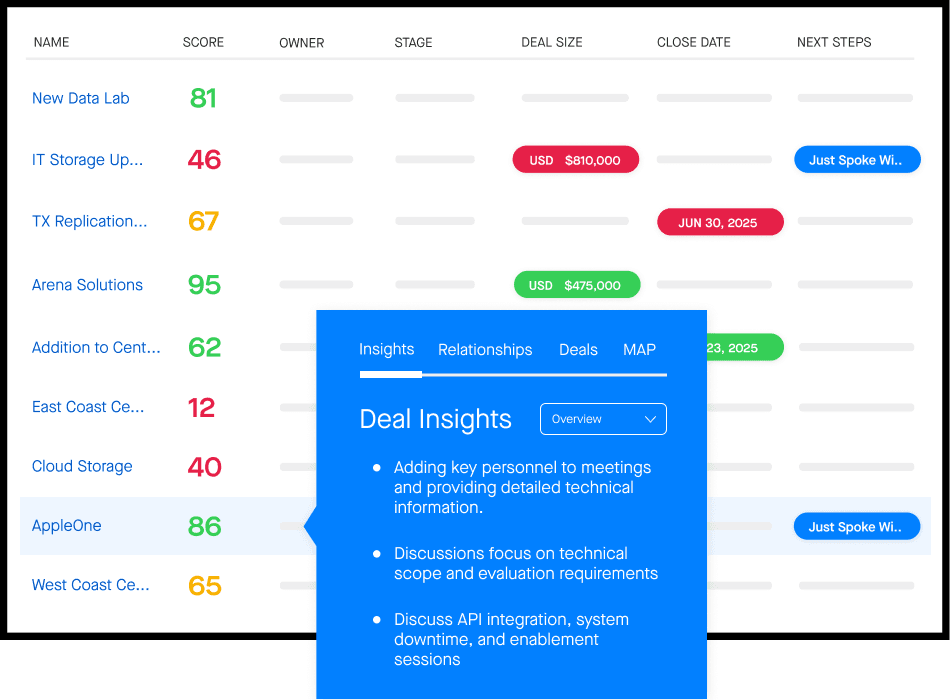
Clari's Revenue Context connects structured and unstructured activity across the revenue lifecycle so the platform's agents can reason about who did what, when it happened, and what outcome followed. That history then feeds use cases such as pipeline inspection, forecasting, deal execution, and revenue operations.
Clari already sits close to the opportunity, forecast, conversation, and activity data that determine whether a deal is actually moving. However, Revenue Context is built to answer revenue questions inside the Clari environment, not to act as a general memory substrate for every research, support, product, or custom agent a company might run.
Conversation memory platforms
Twilio: continuity across customer channels
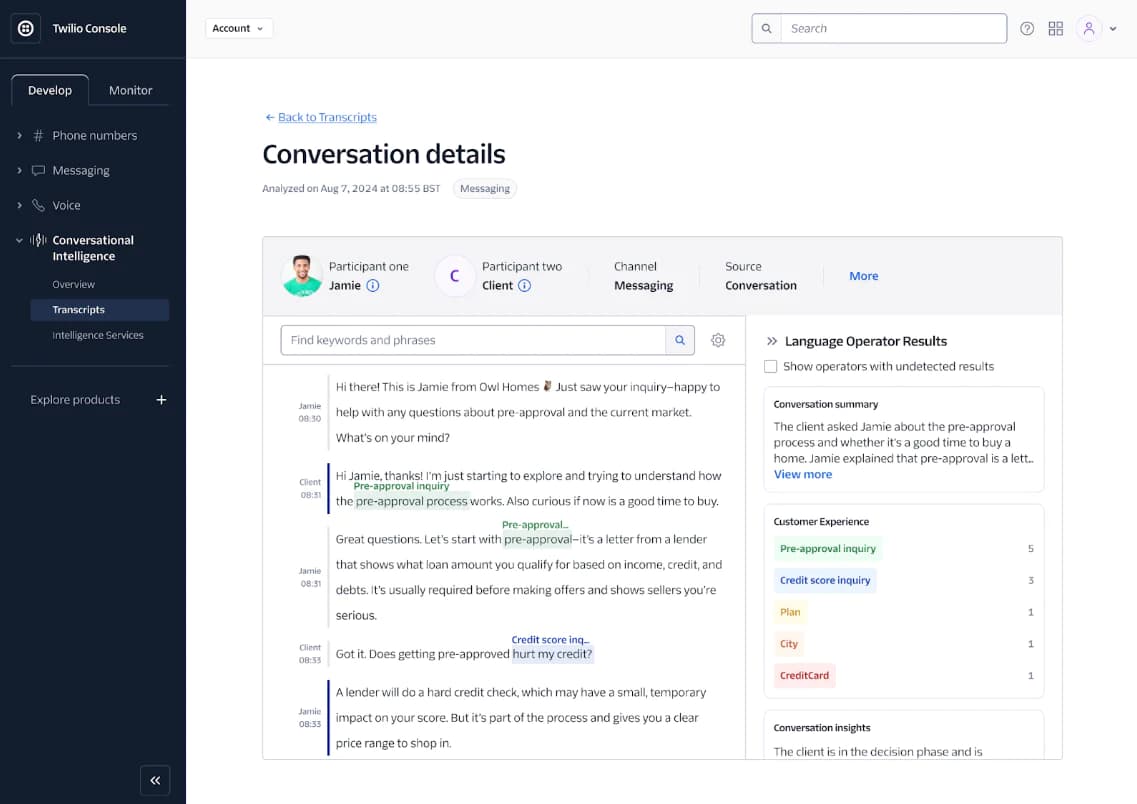
Twilio comes in from the opposite direction: the customer interaction.
Conversation Memory extracts observations from customer conversations, connects them to customer profiles, reconciles new information with existing memory, and makes relevant context available to human or AI agents across channels. It can also combine customer memory with approved enterprise knowledge such as policies, product documentation, and FAQs.
For sales use cases, the main value is continuity. A prospect who starts in website chat, replies through SMS, and later speaks with a person doesn't have to start over at each touchpoint.
Twilio's memory is strongest exactly where conversations already flow through its own communications and customer-data infrastructure. It's a memory layer for the conversation, not a replacement for account intelligence or outcome learning.
Sierra: memory built around the customer conversation
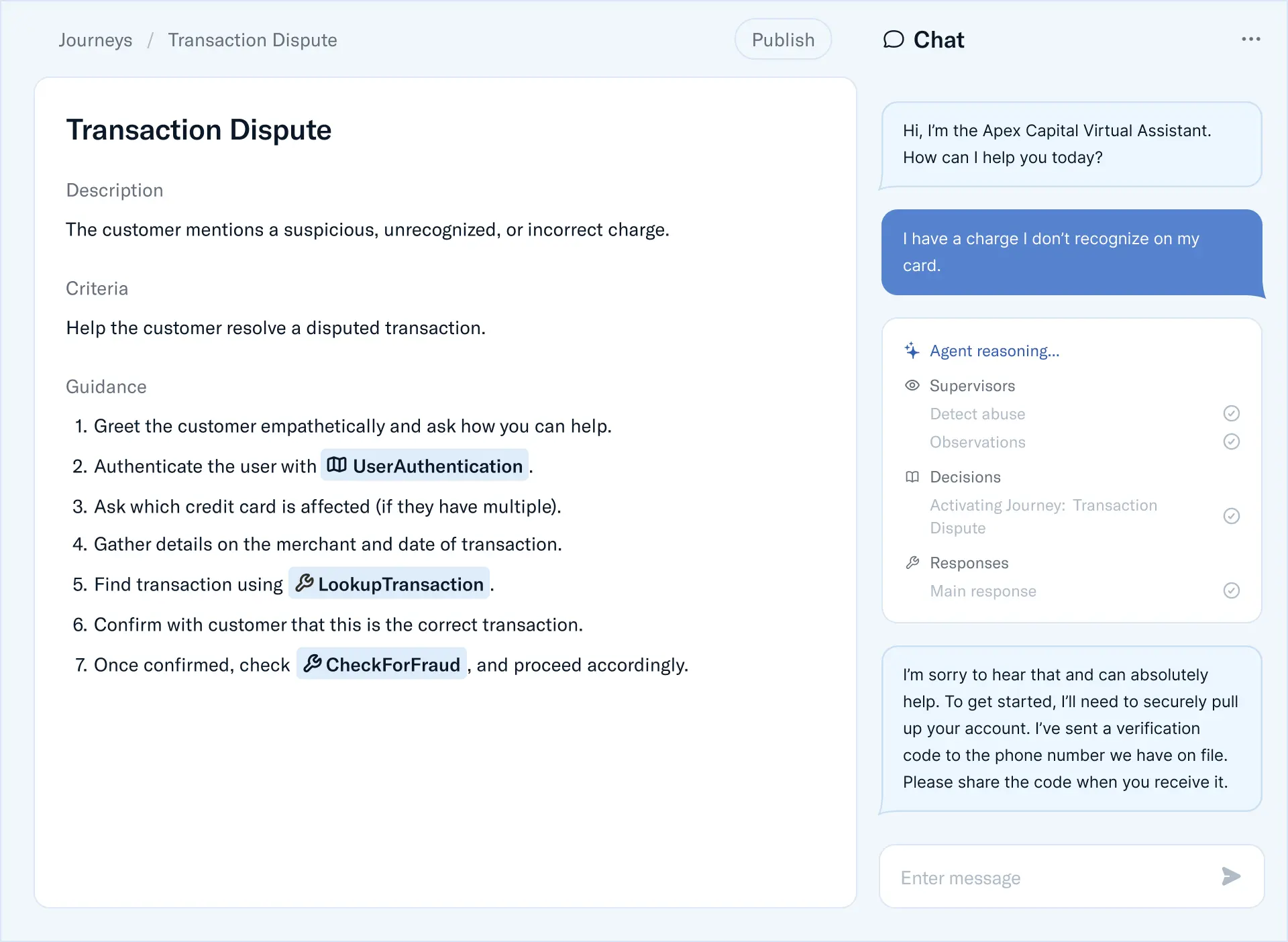
Sierra's Agent Data Platform retains relevant details from previous conversations and combines them with customer history from systems of record.
That context follows the customer across channels including chat, phone, SMS, email, and messaging, so a new interaction doesn't have to begin from scratch simply because it happens somewhere else.
Sierra's memory is organized around the customer relationship rather than the deal, which makes it less directly aligned with sales workflows built around buying committees, opportunity stages, and pipeline history.
Horizontal agent memory platforms
Mem0: a memory layer with a sales use case
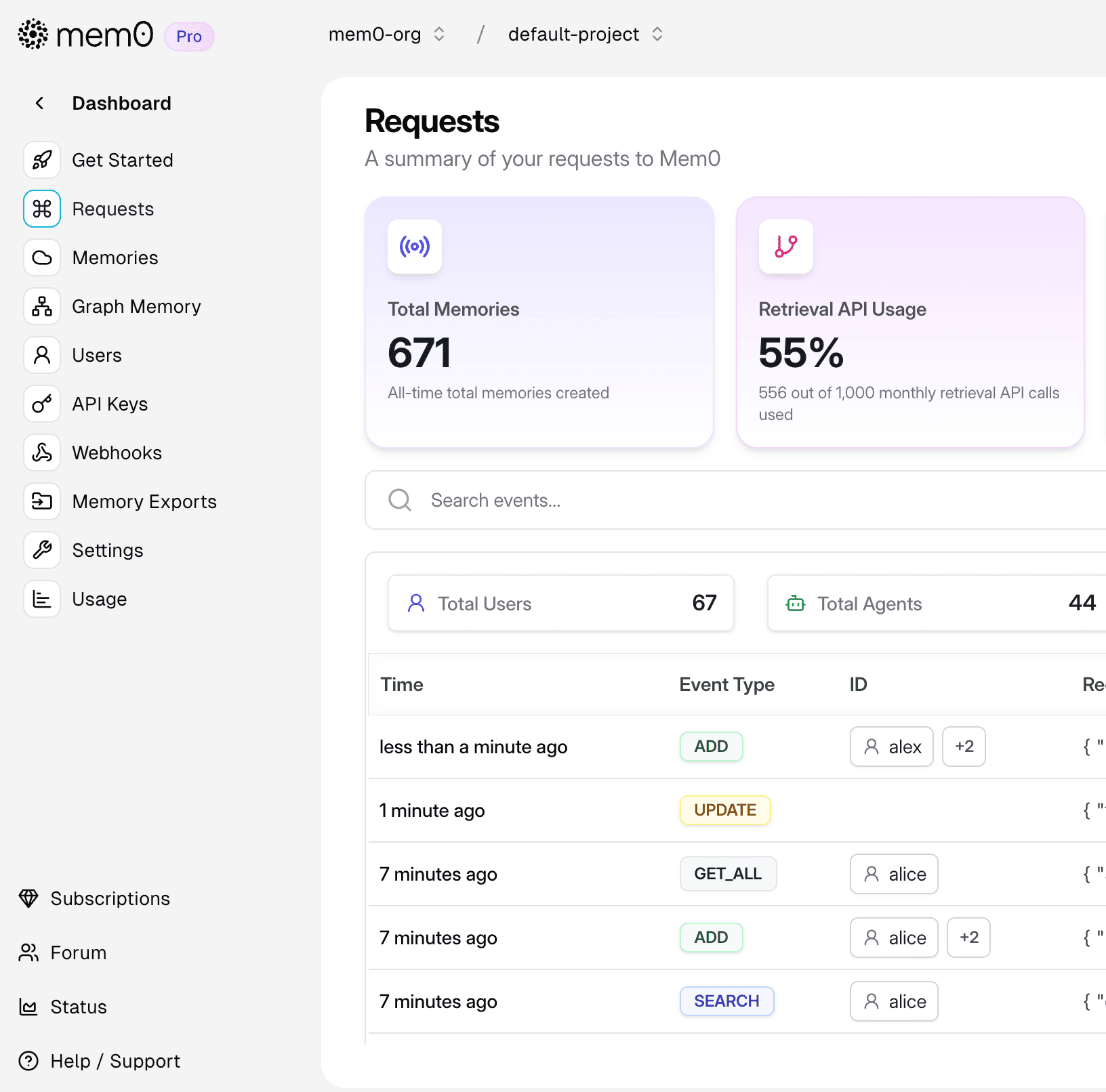
Mem0 started as general-purpose memory infrastructure for agents, and sales turned out to be a specific enough problem to get its own dedicated use case.
Its sales positioning focuses on persistent lead context, objections, milestones, handoff continuity, buyer signals, follow-up cues, and integration with Salesforce, HubSpot, or custom tools.
Mem0 fits companies that don't want memory tied to one sales product. It can be dropped in as an API layer around existing agents and CRM workflows rather than a product a seller has to open.
As with any horizontal memory system, someone still has to decide how sales concepts get represented, what gets written, how account identity is scoped, and which outcomes should influence future retrieval.
Hebbrix: memory weighted by outcomes
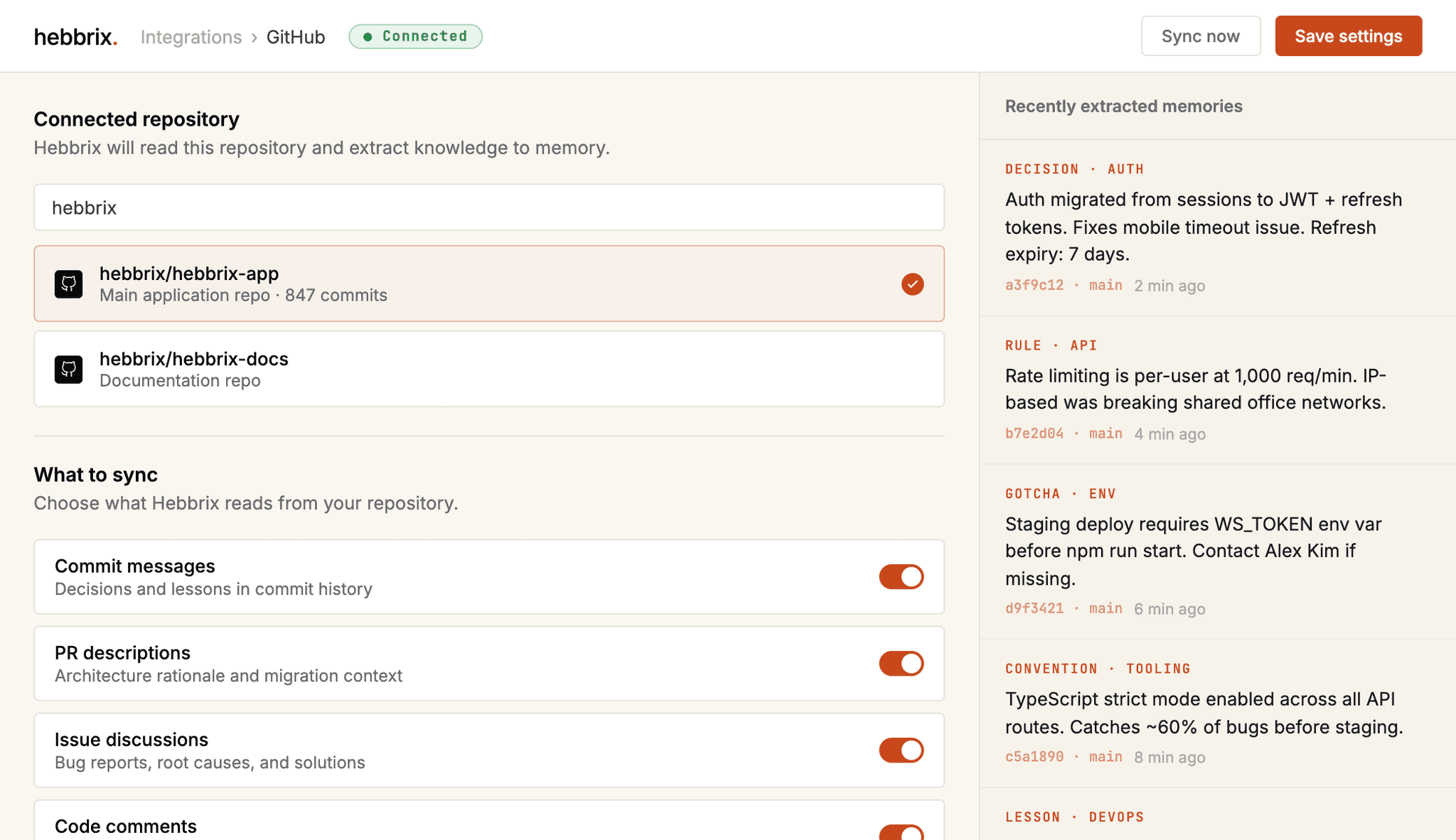
Hebbrix is building a general memory layer around hybrid retrieval, knowledge graphs, temporal validity, memory decay, and automatic context injection — heavier infrastructure than most of the sales-native products above.
Its most distinctive current direction is outcome memory: recall that strengthens memories tied to successful results and lets weaker or unhelpful patterns fade out. Instead of retrieving an earlier interaction just because it resembles the current deal, an agent could favor the guidance, message, or procedure that actually led to progress last time.
The idea is promising, but buyers should be clear about the line between the available production platform and the newer outcome-memory capability that's still under development.
Zep: governed context graphs for enterprise agents
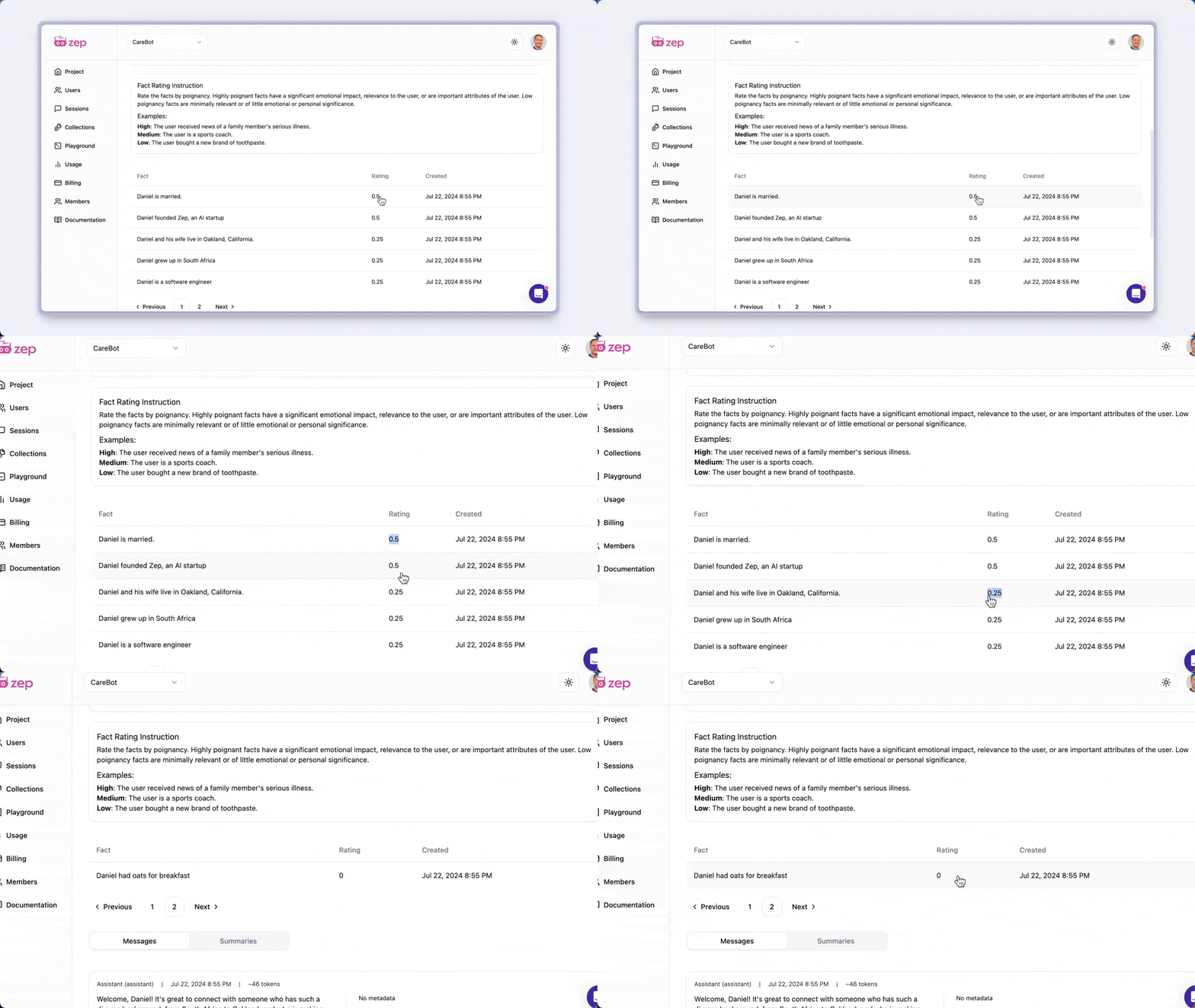
Zep's whole pitch rests on the idea that facts expire and a memory system that doesn't know that will eventually mislead the agent relying on it.
Zep ingests conversations, business data, documents, and user interactions, then assembles facts, summaries, and higher-level observations into token-efficient context. The platform also features temporal invalidation, provenance, access control, retention policies, deployment flexibility, and auditability.
For a sales organization, Zep can model leads, budgets, timelines, account behavior, and changing preferences while serving that context out to different agents.
Its strongest fit is an enterprise that wants a managed, governed memory layer and actually has the engineering headcount to shape it around its own sales process.
cognee: open-source shared memory across the sales stack
Here's a two-minute look at what cognee's memory lifecycle looks like end to end:
cognee is an open-source memory platform for AI agents, with support for graph, vector, and relational retrieval. It can run locally, in self-hosted environments, or through a managed cloud service.
While we didn't design cognee as a dedicated sales intelligence platform, it can be connected to the context any of those tools produce, including CRM records, account research, call transcripts, product documentation, seller corrections, stakeholder changes, and workflow outcomes.
That shared context can then be made available to prospecting, meeting-preparation, account-planning, enablement, and deal-review agents.
The graph layer's value becomes clear when you ask complex relationship-dependent questions like:
- Which stakeholders influenced this opportunity?
- What objections recur in this segment?
- Which evidence changed a similar buyer's position?
- What worked for accounts with a comparable profile?
- Which earlier assumptions have since been corrected?
We have numbers to back this up: in our controlled test involving 198 simulated sales conversations, we saw structured graph memory improve first-pitch accuracy from 49% to 78%.
When it comes to broader memory retrieval, we've compared cognee's performance with Mem0, Graphiti (the engine behind Zep), and LightRAG, and our BEAM evaluation has produced 6.5% above the reported SOTA at 100K tokens and matched it at 10M using our standard open-source stack.
cognee can be integrated with several agent frameworks and connected to any MCP-compatible client.
Trends shaping AI memory for sales intelligence in 2026
Context graphs are entering the GTM vocabulary
Graphs used to be a purely technical detail of memory infrastructure. Not anymore.
ZoomInfo uses a GTM Context Graph to connect companies, contacts, deals, activities, and signals. Sybill uses a context graph to model relationships among buyers, products, playbooks, processes, and sales outcomes. Zep and cognee use graph-based memory as a horizontal layer for agents.
The idea underneath all of it is that sales context gets more useful once a system can retrieve relationships and changes — see why agent memory needs relational structure, not just recall for the fuller argument.
The category is moving from interaction history to outcome memory
The first generation of agent memory was mostly about remembering what a user said. The next generation cares more about what happened afterward.
Did the buyer respond? Did the objection disappear? Did the account progress? Did the recommendation create unnecessary work? Did a message work for one segment but fail in another?
Sybill already feeds outcomes back into later recommendations. Hebbrix is building explicit outcome-weighted recall. And our internal sales experiment also points toward memory being a way to retrieve what actually worked for a comparable buyer profile.
Memory has to travel across agents
A single sales agent might handle one conversation, but a modern GTM workflow can involve research, enrichment, outreach, meeting, CRM, forecasting, and account-planning agents. Give each one its own memory and you just end up with one silo per agent instead of one silo per app.
The useful context therefore has to travel. Different agents should be able to work from the same account history, and that history should survive when a company swaps models, frameworks, or applications.
ZoomInfo is already exposing its context layer through APIs and MCP, Twilio describes its Conversation Memory as model-agnostic, and horizontal platforms such as Mem0, Zep, Hebbrix, and cognee are built so that memory can follow the work from one agent to the next.
The importance of this increases as the account history compounds: replacing an agent shouldn't mean abandoning everything the system learned with it.
Build, buy, or rely on embedded memory?
| Approach | Best when | Main advantage | Main risk |
|---|---|---|---|
| Use embedded memory | One sales platform already owns most of the workflow | Faster adoption and less integration work | Context may remain confined to one vendor |
| Buy a horizontal memory layer | Several agents and applications need shared context | Portability and a common memory model | Requires deliberate integration and governance |
| Build internally | Memory behavior is a strategic differentiator or deployment constraints are unusual | Maximum control | High engineering and maintenance burden |
Use embedded memory when the workflow is bounded
If the main goal is better meeting prep, call follow-up, website conversations, or account research inside one established product, native memory may genuinely be enough.
A company standardized on Sybill may not need another system to preserve deal context, a Twilio-centered customer journey may get all the continuity it needs from Conversation Memory, and a ZoomInfo-heavy GTM stack may get real value from its context graph and external agent interfaces alone.
The ceiling materializes the moment account history has to travel into an application the platform doesn't control.
Buy a horizontal layer when context must be shared
A separate memory platform starts making sense once several agents, models, or business systems need the same evolving account context.
It also buys freedom: an agent or model can get replaced later without dragging the memory built up behind it into the trash along with it.
The tradeoff is ownership — someone has to define what gets remembered, how identity and permissions work, and how anyone actually knows whether the memory is any good.
Build when memory itself creates differentiation
Building internally can make sense when an organization runs an unusual sales process, has unusually specific governance requirements, has proprietary outcome signals worth protecting, or faces deployment constraints nothing off-the-shelf will satisfy.
But building memory means a lot more than adding a vector database.
The internal system will need identity resolution, ingestion, updates, retrieval, ranking, source tracking, access controls, deletion, observability, evaluation, and a migration plan for when any of that changes. The real cost can hit you later, in maintaining all of it as the sales stack and agent architecture keep evolving.
Most companies will start small and end up running both
Most companies probably won't choose between native and shared memory once and for all. They'll start with the memory already built into a sales application, then add a shared layer once context needs to move across agents, tools, and workflows.
Adoption will likely start with bounded use cases where the value is easy to inspect: meeting preparation, post-call follow-up, account briefs, opportunity handoffs, CRM updates, renewal preparation, and deal-risk summaries. These workflows already depend on scattered context, but they still leave a person making the final call.
As more of them connect, the division of labor clarifies: native memory improves the task inside a particular application, while shared memory carries what matters from one application to the next. The likely end state isn't one memory system replacing everything, but a stack where the two do different jobs.
That also puts RevOps close to the center of the decision. Memory touches account identity, CRM structure, permissions, workflow design, lifecycle rules, and measurement — which is, not coincidentally, mostly stuff RevOps already owns and neither sales nor engineering particularly wants.
That won't necessarily mean maintaining the memory infrastructure directly. It'll mean deciding what the business should remember, who gets to use it, and how those memories fit into processes that already exist.
Sales agents need continuity, not just more data
Sales intelligence products already provide more signals than most organizations can fully use. What's missing is a way to preserve the context connecting those sources over time — the thread between one signal and the next one.
Memory turns a series of isolated AI tasks into a continuing account workflow. It lets research inform outreach, conversations update account knowledge, outcomes influence later recommendations, and new agents pick up a relationship without reconstructing it from scratch.
Carry this into 2026: every vendor in the list above can already tell your agents what's happening right now. The ones worth betting on are the ones whose agents still remember what happened last quarter.
FAQ
How is AI memory different from RAG in a sales workflow?
RAG retrieves relevant information from an external knowledge source when an agent needs it. AI memory adds continuity by carrying forward information from previous interactions, decisions, corrections, and outcomes.
A sales agent might use RAG to find the latest pricing document, while memory helps it recall which pricing concern this buyer raised before and what happened after the seller responded.
Does every sales agent need long-term memory?
No. A short-lived task such as formatting a CRM note or summarizing a single call may only need the context available in that session.
Long-term AI memory becomes more useful when an agent returns to the same accounts, works across several interactions, or passes context to other agents and sellers.
How quickly should sales memory update?
It depends on the workflow. A meeting or outreach agent may need new information almost immediately, while inferred preferences, account summaries, or outcome patterns may be better updated only after they've been confirmed.
The important part is avoiding two extremes: memory that lags behind the actual account, and memory that treats every new observation as permanent truth.
How should an organization test AI memory before using it in live sales workflows?
Start with a bounded workflow and a known set of account histories. Check whether the agent retrieves the right context, ignores unrelated records, distinguishes current facts from outdated ones, and can trace important claims back to their sources.
Testing should also include messy cases: duplicate contacts, conflicting CRM data, stakeholder changes, deleted information, and accounts with very little history.